The Five Features in Chinese Face Reading: Eyebrows, Eyes, Nose, Mouth and Ears
A guide to the five features (五官) of Chinese face reading: the five officers, what traditional readers looked at for each feature, and what a photo can really show.
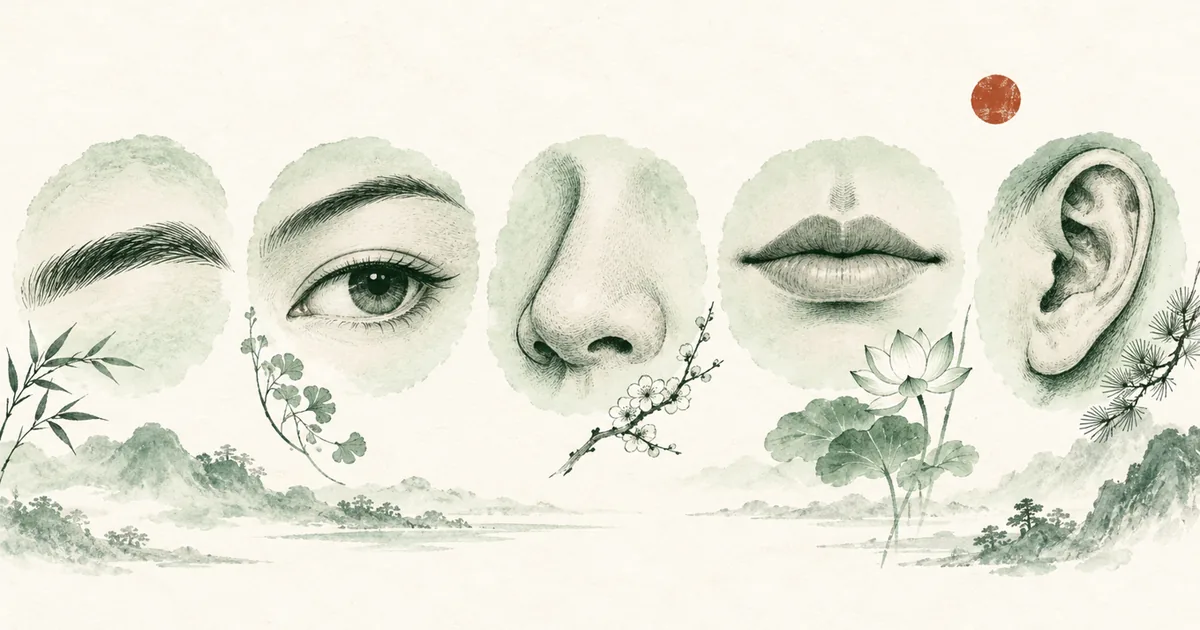
In Chinese, wǔ guān (五官) simply means the five sense organs. In face reading, the term names the five main features of the face — eyebrows, eyes, nose, mouth and ears — and each is given an "officer" title. This post walks through all five: the title, what traditional readers paid attention to, and what you can honestly see in a photo.
Eyebrows (眉) — the Longevity Officer
The eyebrows are called the bǎo shòu guān (保寿官). They also sit on the Siblings Palace, so the tradition linked them with brothers, sisters and close peers. Readers looked at length compared with the eye, thickness, the curve, and the gap between the brows — that gap is the Life Palace (命宫).
Photo note: brows are heavily groomed today, which the classical manuals never had to account for. More on eyebrows.
Eyes (眼) — the Inspecting Officer
The eyes are the jiān chá guān (监察官). Overviews often describe the eyes as getting special weight, with a large vocabulary of named shapes, many borrowed from animals. Readers looked at shape, the angle of the outer corners, spacing and the eyelid.
Photo note: ChineseFace describes only shape and position. It does not read expression or emotion. More on eyes.
Nose (鼻) — the Judging Officer
The nose is the shěn biàn guān (审辨官). It sits at the center of the face and carries two palaces: the "mountain root" between the eyes and the Wealth Palace at the tip. Readers looked at the line of the bridge, the tip and the nostril wings.
Photo note: the nose is the anchor for most map lines because it sits in the middle. More on the nose.
Mouth (口) — the Speaking Officer
The mouth is the chū nà guān (出纳官), the officer of intake and output, because it handles both food and speech. Readers looked at width relative to the eyes, the fullness of each lip and the direction of the corners at rest.
Photo note: a smile changes the mouth completely, so a relaxed face reads best. More on the mouth.
Ears (耳) — the Listening Officer
The ears are the cǎi tīng guān (采听官). The tradition paid special attention to earlobes, and long earlobes appear often in Chinese art, especially Buddhist statues — an artistic convention with its own history. Readers compared ear height with the brow and nose, lobe size and how close the ear lies to the head.
Photo note: ears are often hidden by hair. When they are, ChineseFace skips the ears card instead of guessing. More on ears.
Reading the five together
Traditional readers did not judge one feature in isolation. They looked at how the five sat together, and at balance across the face. That is also why the three sections — a measure of proportion — usually come next.
What a photo can and cannot tell you
A photo can show shape, position and rough proportion. It cannot tell anyone about your personality, health, love life or money — and neither can the tradition, whatever its manuals claim. ChineseFace keeps the "what is visible" description and the cultural context separate on every card so you always know which is which. Try it with a free preview, or browse the sample report.
More Posts
How to Take the Best Photo for a Face Reading
Practical tips for a clear face reading photo: light, angle, distance, expression and what to remove, so every area of the face map is visible.

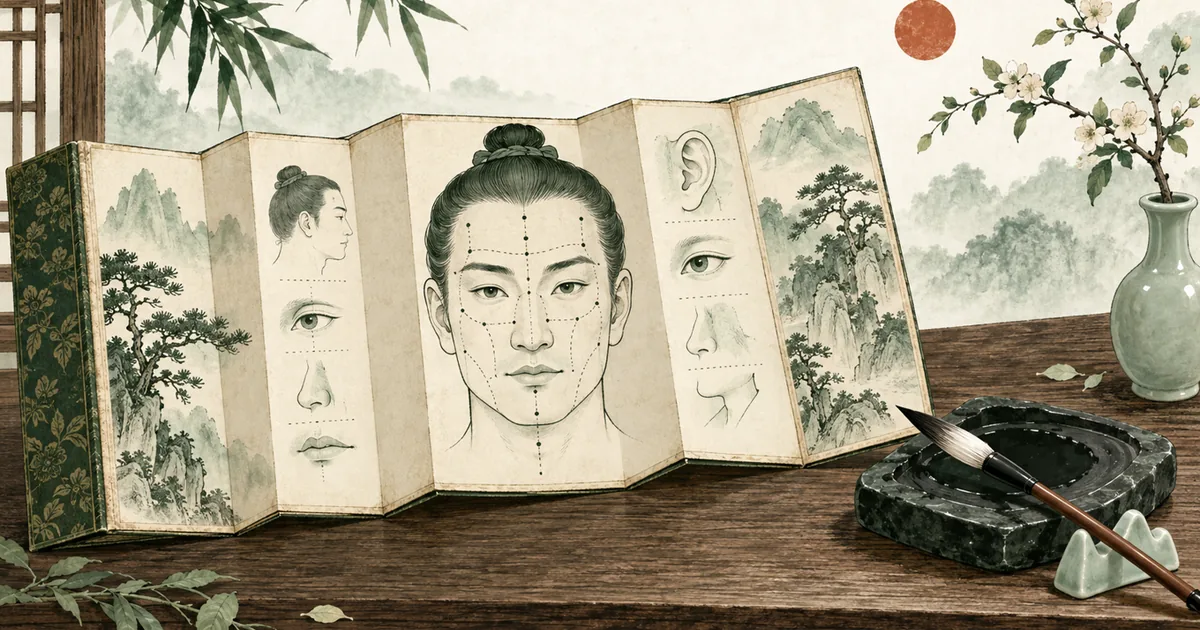
What Is Chinese Face Reading? A Clear Guide to Mian Xiang
What Chinese face reading (面相, mian xiang) is, how the tradition maps the face in five features, three sections and twelve palaces, and how to approach it today.
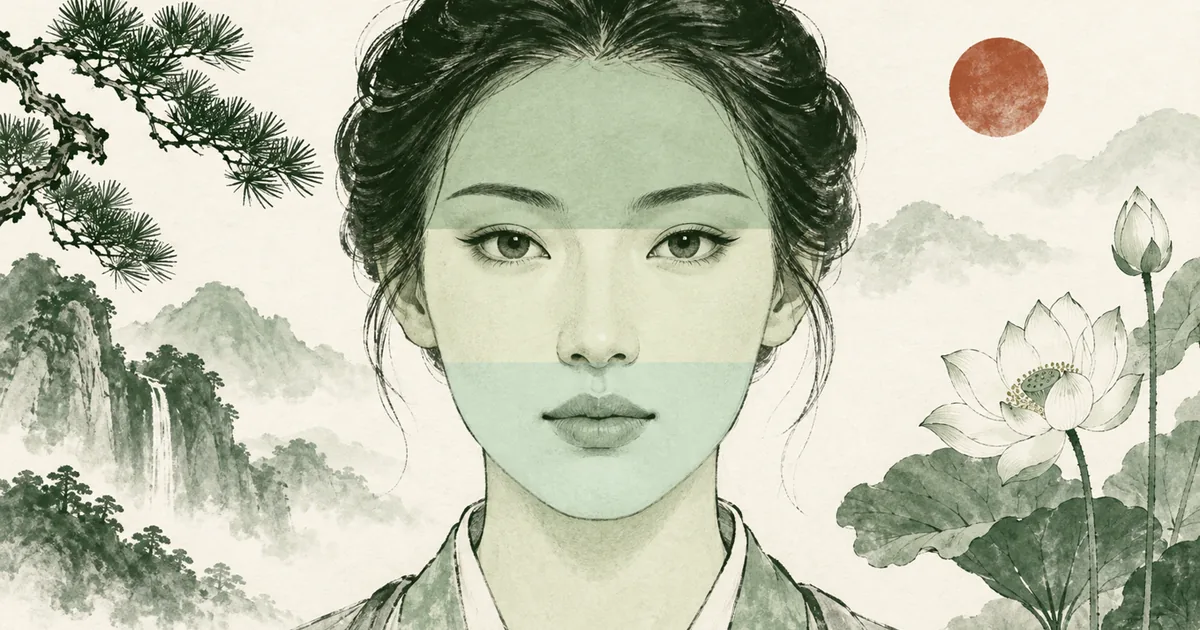
The Three Sections of the Face (San Ting) Explained
How Chinese face reading divides the face into three sections (三停, san ting), how each one is measured on a photo, and what the tradition linked them to.