Chinese Face Reading · miàn xiàng
Chinese Face Reading from Your Photo
See your face as the Chinese tradition mapped it — five features, three sections, twelve palaces. Each card tells you what is visible in your photo, then what the tradition says.
- 1Upload
- 2Photo check
- 3Face map
Free preview: 1 per day, plus 1 more when signed in. Photo tips
- 5 · 3 · 12features, sections, palaces
- Free previewno account needed
- Photo deletedafter processing
- 10 languagesread it in your own
01What is it
What is Chinese face reading?
Chinese face reading — miàn xiàng (面相) — is a centuries-old tradition that treats the face as a map. It names five features, divides the face into three sections, and places twelve palaces across it.
ChineseFace draws that map over your own photo. An AI model describes what is visible; our reviewed knowledge base explains what the tradition says. The two are always kept apart, so you learn the culture without being told who you are.
Read the full guide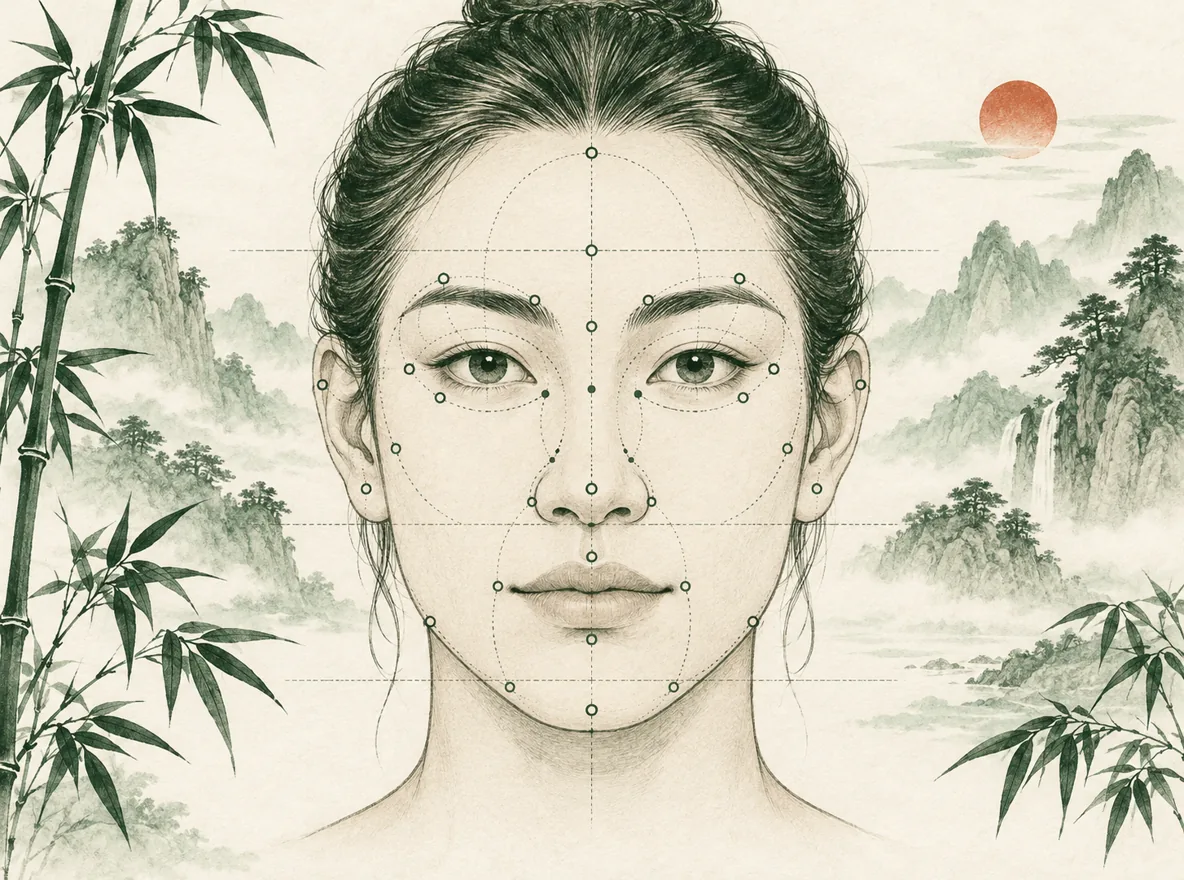
02Explore the map
Every area of the face, explained
Eyebrows · 眉
Length, curve and the gap between the brows — the Longevity Officer.
Learn more →Eyes · 眼
Shape, outer-corner angle and spacing — the Inspecting Officer.
Learn more →Nose · 鼻
Bridge, tip and nostril wings — the Judging Officer.
Learn more →Mouth · 口
Width, lips and corners at rest — the Speaking Officer.
Learn more →Ears · 耳
Height, earlobes and angle — the Listening Officer.
Learn more →Forehead · 额
The upper section and four palaces placed on it.
Learn more →Chin · 颏
Rounded, squared or pointed — the lower section.
Learn more →Three sections · 三停
Heaven, Humanity and Earth from hairline to chin.
Learn more →Twelve palaces · 十二宫
Where each named palace sits on the face.
Learn more →03Why ChineseFace
Your face, mapped the classical way
What you get
- A face map over your photo, with three layers: five features, three sections, twelve palaces.
- Plain descriptions of what is visible — shape, position, proportion — and what is covered.
- The tradition behind each area, with Chinese terms (pinyin + characters).
- A PDF you can keep, and a delete button that really deletes.
How it works
- 01
Upload one photo
Front-facing, good light, just you. Rotate it in the browser if needed.
- 02
Photo check
We tell you if the photo is good, partly usable (and which area), or needs a retake — a retake does not use your preview.
- 03
Your face map
Tap any point on the map to open its card: what is visible, traditional context, and explore the meaning.
- 04
Keep or delete
Unlock the full reading and save a PDF — or delete the reading in one tap.
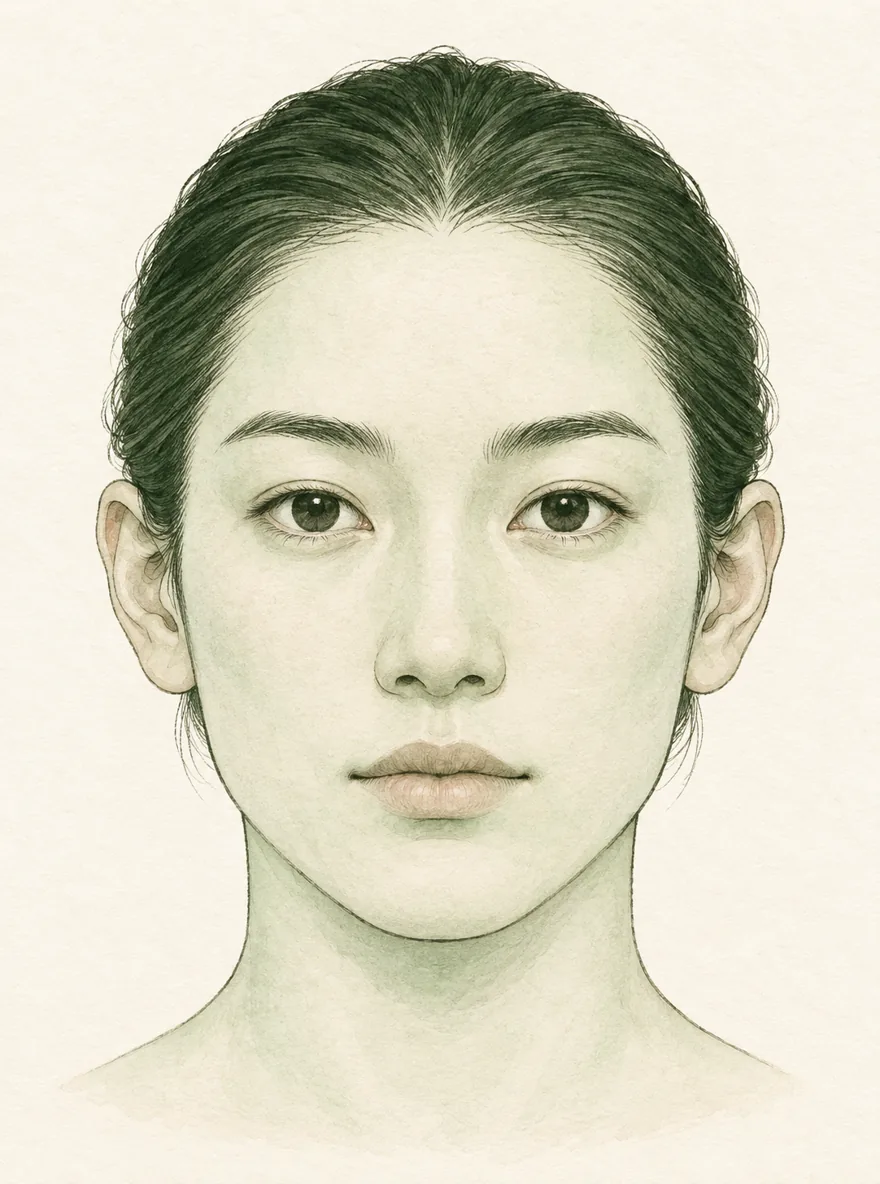
Illustrated face with the twelve-palace layer.
From photo to map
From a plain photo to a twelve-palace map
The same illustrated face, before and after the traditional layers are drawn on it.
Life Palace 命宫
Placed on the space between the eyebrows.
Career Palace 官禄宫
Placed on the center of the forehead.
Wealth Palace 财帛宫
Placed on the nose, especially the tip.
Spouse Palace 妻妾宫
Placed on the outer corners of the eyes, toward the temples.
Friends Palace 奴仆宫
Placed on the lower jaw on either side of the chin.
- All twelve palaces →
Inside a reading
One tap, three layers
Every point on your face map opens a card like this. Shown on our illustrated sample face — no real person.
Sample face · five-feature layer
Eyebrows · 眉 méi
1. What is visible
Eyebrows: medium length, extending to about the outer corner of the eye; gently curved; evenly filled. The gap between the brows is clearly visible.
2. Traditional context
The tradition calls the eyebrows the Longevity Officer (保寿官) and places the Siblings Palace (兄弟宫) on them.
3. Explore the meaning
Why might early readers have linked the brows — the frame above the eyes — to family ties? Notice how the map borrows ideas from Chinese cosmology.
04Use cases
Ways people use ChineseFace
Learn the tradition
See the five features, three sections and twelve palaces on a real face instead of a textbook drawing.
Cultural curiosity
Heard about mian xiang in a drama, a novel or from family? Explore the vocabulary with pinyin and characters.
Art and writing
Use the face-map vocabulary as reference for character design, calligraphy projects or essays.
Teaching
Show students how a traditional system was built — and why it is not evidence about a person.
Keep a keepsake
Save your face map as a PDF to look back on, or delete it in one tap.
Compare photos
Try two photos taken at different angles and see how much a camera changes proportions.
05Feedback
What a good reading feels like
We are newly launched, so these are illustrative examples of the feedback we design for — not quotes from named customers. Real reviews will appear here once readers share them.
“I finally understood where the twelve palaces are. Seeing them on my own photo made the old diagrams click.”
“I liked that it told me what it could not see — my fringe covered the forehead and it said so.”
“No horoscope talk, just the tradition explained clearly. That is what I wanted.”
Privacy & trust
Your face is personal. We treat it that way.
Photo deleted after processing
Your original photo is used once to describe visible features, then removed from storage.
No identification
We never recognise who you are, compare you with other people, or keep a face template.
Delete any reading
Every reading has a delete button that removes it from our database.
Adults, own photo only
You confirm you are 18+ and the photo is of you before anything is processed.
AI clearly disclosed
An AI model only checks the photo and picks appearance words from a fixed list. It never writes meanings.
No sensitive guesses
No personality, health, fate, emotion, age, ethnicity or identity inference — ever.
Details in our Privacy Policy and Methodology.
06Pricing
Start free, unlock when you want more
Free preview
$0
Photo check, five-feature map, eyebrow and eye cards.
Single reading
$2.99
Unlock one full reading with PDF export.
5-pack
$7.99
Five full readings, use them any time.
Pro
$5.99/mo
15 full readings every month.
07From the blog
Guides to Chinese face reading
Related guides & tools
Questions
What is Chinese face reading?
+
Chinese face reading (面相, miàn xiàng) is a traditional practice that treats the face as a map: five main features, three horizontal sections, and twelve named "palaces". ChineseFace explains that tradition using your photo as the map.
What happens to my photo?
+
Your photo is sent to an AI service to describe visible features, then deleted. We do not identify you, compare you with anyone, or keep a face template. You can delete any reading at any time.
What is free?
+
A free preview: photo check, your five-feature face map, and full cards for your eyebrows and eyes. One per day without an account, two when signed in.
What does the full reading add?
+
Full cards for all five features plus forehead and chin, your three-section proportions, your personal twelve-palace map, and PDF export.
Is the AI deciding what my face means?
+
No. The AI only checks the photo and describes visible features with a fixed vocabulary. Every cultural explanation is written by us in a reviewed knowledge base and labelled as tradition.
Can I delete my reading?
+
Yes. Every reading has a delete button. Deleting removes the reading from our database, and the original photo is already gone after processing.
Who can use it?
+
Adults 18 and older, with a photo of themselves. We do not read photos of children, groups, or other people.
See your face as the tradition mapped it
One photo, a free preview, and nothing kept that you did not choose to keep.