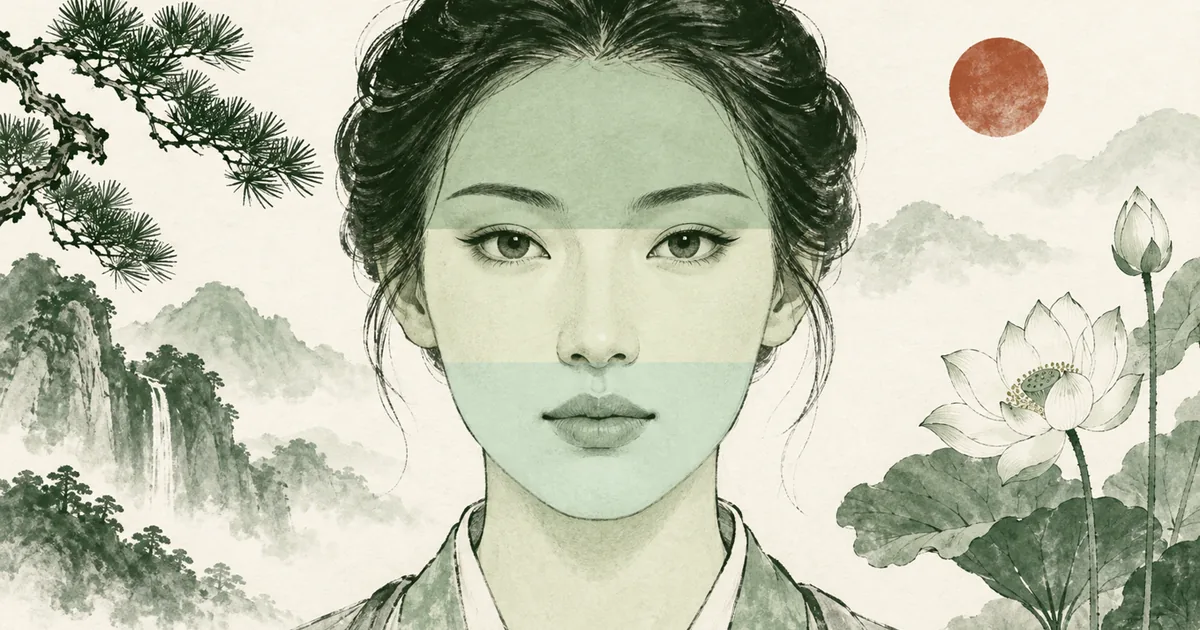
The Three Sections of the Face (San Ting) Explained
How Chinese face reading divides the face into three sections (三停, san ting), how each one is measured on a photo, and what the tradition linked them to.
Among all the layers of Chinese face reading, the three sections (三停, sān tíng) are the easiest to see for yourself. You do not need to memorise palace names or officer titles. You only need a straight-on photo and three horizontal lines.
This article explains where those lines go, what the tradition associated with each section, and why a measurement on a photo is only ever an approximation.
Where the three lines go
The face is divided from top to bottom into three bands:
- Upper section (上停, shàng tíng): from the hairline down to the brow line.
- Middle section (中停, zhōng tíng): from the brow line down to the base of the nose.
- Lower section (下停, xià tíng): from the base of the nose down to the bottom of the chin.
In many face-reading manuals the "balanced" face is drawn with three roughly equal bands. Real faces rarely match that drawing exactly, and the tradition itself treats the ideal as a reference point, not a rule every face should meet.
Heaven, Humanity and Earth
The three sections borrow a very old Chinese framework: Heaven (天), Humanity (人) and Earth (地), often called the "three powers" (三才, sān cái). This trio appears across Chinese philosophy, from the Book of Changes to later cosmology, and face readers mapped it onto the face from top to bottom.
- The upper section was linked with Heaven and, in the manuals, with early life.
- The middle section was linked with Humanity and with the middle years.
- The lower section was linked with Earth and with later life.
These are the tradition's own associations. They describe how practitioners built their system, not facts about any individual. ChineseFace reports them as cultural context and never as a statement about you.
How a photo changes the numbers
Measuring the sections from a photo is surprisingly sensitive to small things:
- Camera angle. Tilting the head down makes the forehead look larger and the chin smaller. Tilting it up does the opposite.
- Lens distance. A phone held very close to the face exaggerates whatever is nearest to the lens, usually the nose.
- Hairline. A fringe, a hat or a hairstyle can hide where the upper section really starts. In that case we mark the upper section as partly visible rather than guess.
- Expression. Smiling lifts the cheeks and changes the lower section.
That is why the ChineseFace photo check asks for a level, front-facing photo at arm's length with a neutral expression, and why every proportion in a reading is shown as an approximate share rather than an exact measurement.
Reading the sections without a verdict
A useful way to explore the three sections is to look at them as a drawing exercise:
- Which band looks longest in your photo, and which looks shortest?
- Does the result change if you take a second photo with the camera at eye level?
- How does the tradition describe each band, and where did that description come from?
Questions like these keep the tradition interesting while staying honest about what a face can show. The proportions of a face do not reveal personality, health or the future, and no reliable study has found that they do.
Try it on your own photo
Upload a photo on the ChineseFace home page and open the three-section layer of your face map. You can also read the full guide to the three sections of the face, or compare them with the twelve palaces that sit on top of the same map.
More Posts
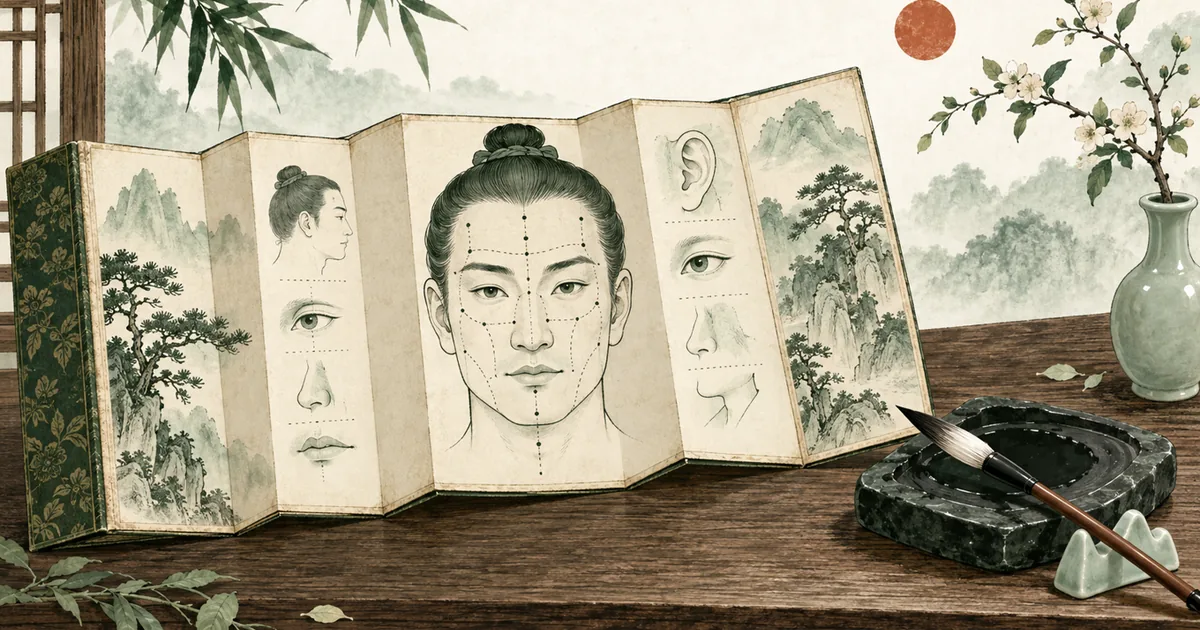
What Is Chinese Face Reading? A Clear Guide to Mian Xiang
What Chinese face reading (面相, mian xiang) is, how the tradition maps the face in five features, three sections and twelve palaces, and how to approach it today.

A Short History of Chinese Face Reading (Mian Xiang)
Where Chinese face reading came from: early critics like Xunzi, the famous manuals attributed to Ma Yi and others, and how the practice is seen today.
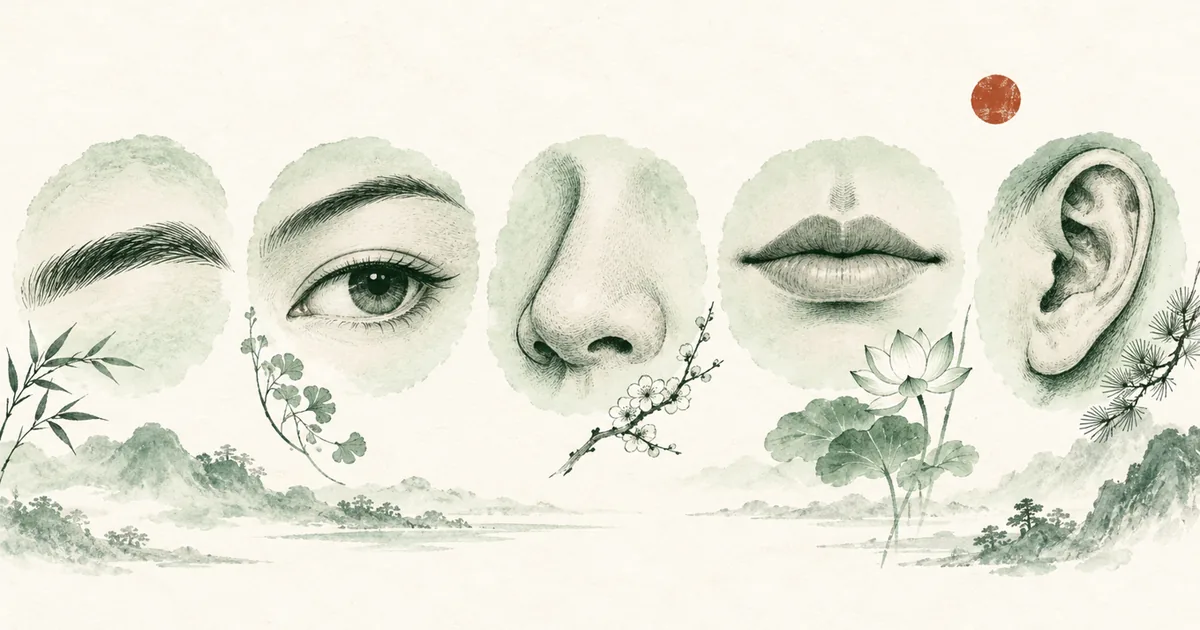
The Five Features in Chinese Face Reading: Eyebrows, Eyes, Nose, Mouth and Ears
A guide to the five features (五官) of Chinese face reading: the five officers, what traditional readers looked at for each feature, and what a photo can really show.