ChineseFace logoChineseFace
  • Sample report
  • Pricing
  • Blog
面相
ChineseFace logoChineseFace

Chinese Face Reading from your photo: a face map of visible features and the cultural tradition behind them. Not fortune telling.

Email
Product
  • Start a reading
  • Sample report
  • Pricing
  • Photo guide
  • About
Learn
  • Face reading chart
  • Five features
  • Three sections
  • Twelve palaces
  • Methodology
  • Blog
Explore
  • AI face reading
  • Free online face reading
  • Mian xiang (面相)
  • Glossary
  • Compare
Legal
  • Privacy Policy
  • Terms of Service
  • Refund Policy
  • Email Support
LanguageEnglish简体中文繁體中文日本語한국어EspañolFrançaisDeutschItalianoPortuguês
© 2026 ChineseFace. A cultural tradition, explained with care.

Sample report

Sample Chinese face reading

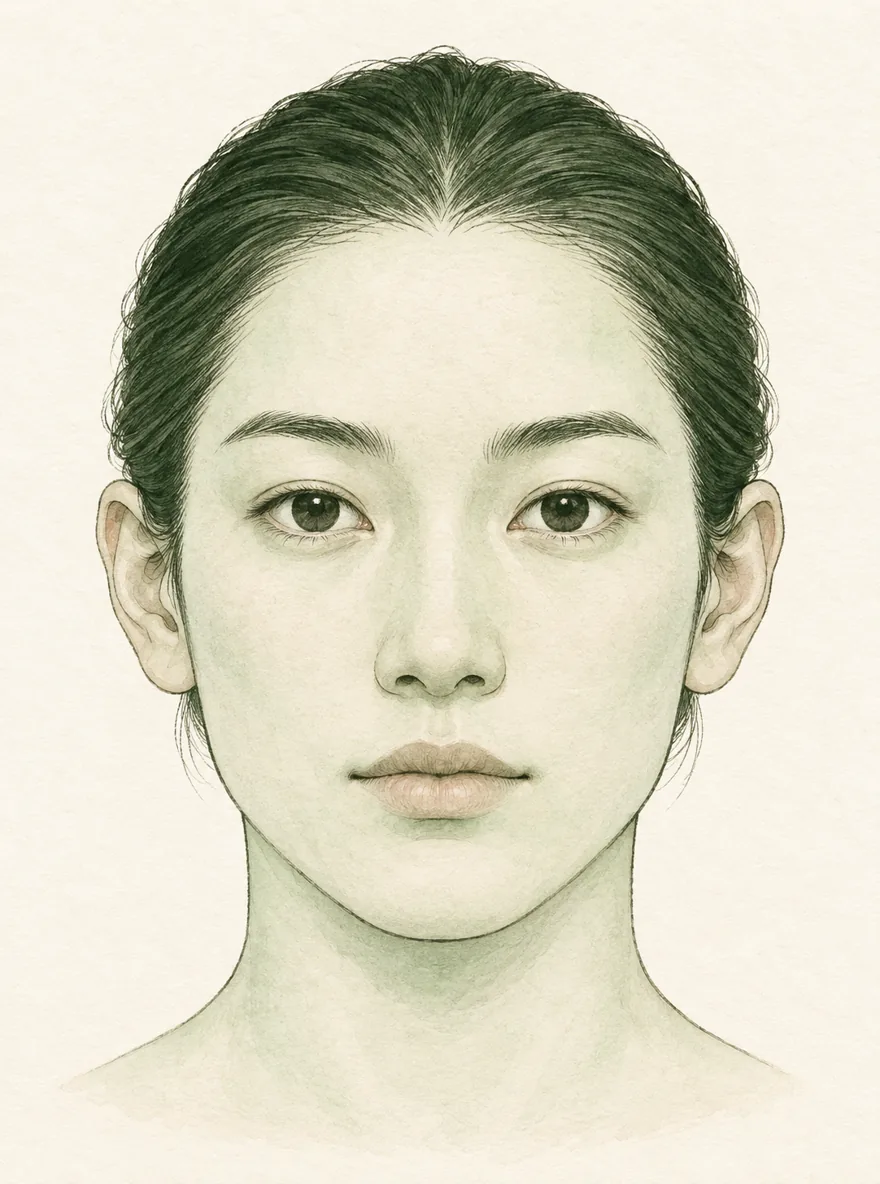
This is what a full reading looks like. The face is an illustration so no real person is shown. Start your own free preview.

Illustrated neutral adult face used for the sample map (not a real person)眉眼鼻口耳额颏

Photo check: good

Map points are approximate cultural areas, not measurements.

Your summary

This sample uses an illustrated face, not a real person. It shows every layer of a full reading: five features, forehead and chin, the three sections, and the twelve palaces.

Get your own free preview →

Measured from your photo

Face measurements 量相

478 facial landmarks are located in your browser and measured against the classical proportions. The hairline is estimated from the brow-to-forehead curve.

Five-element face

水 Water

Length to width 1.31

Character face 十字面

圆字面

round and full

Three sections

24% · 40% · 35%

Longest: middle section

Symmetry

99/100

Very even left and right

Five eyes 五眼

4.8 eyes wide

Gap between eyes: 1.25 eye widths

Hall of Seal 印堂

balanced

Brow gap 0.99 eye widths

Mountain Root 山根

Low

Bridge height between the eyes

Eyes

Upturned

Opening ratio 0.35

Brows

Longer than the eye

Arched

Nose

29% of face length

Width to eye gap 0.99

Mouth

Small

Corners turn down

Chin

49% of face length

Your classical reading

The Balanced Water Face: Harmony in Motion

This is a Water-element face (水相), marked by a round, full outline and gentle proportions. The 十字 structure shows a round face type (圆), which in classical reading suggests adaptability and emotional fluidity. The length-to-width ratio of 1.313 confirms a face that is neither stretched nor compressed—a harmonious oval-round form. Water faces traditionally carry themes of sensitivity, intuition, and social ease. The balanced three sections (24–40–35 percent) indicate that no single life phase dominates; instead, there is continuity of influence across youth, middle years, and later life.

This face presents a portrait of natural equilibrium and refined sensitivity. The round Water-element form, combined with nearly perfect symmetry (99 out of 100), suggests someone whose inner and outer worlds align well. The classical schools read such harmony as a sign of steady fortune and the capacity to navigate life's changes with grace. The middle section's prominence points to active engagement in the present moment, while the balanced lower face promises stability in later years.

Three sections 三停

Upper section 上停 · youth

The upper section at 24 percent is proportionate and moderate—neither high nor low. A medium-height, broad forehead sits above a well-defined brow line. In the Liuzhuang and Mayi schools, a moderate upper section in youth (少年) suggests a thoughtful early life: not rushed, but not delayed. The forehead's medium width and gentle curve indicate steady intellectual development and the capacity to learn from experience. The classical reading associates this proportion with a person who comes into their own gradually, gaining wisdom through observation rather than precocity. The Travel and Parents palaces here show quiet influence from family and early surroundings.

Middle section 中停 · middle years

The middle section dominates at 40 percent, marking the prime of active life (中年). This is the realm of the Inspecting Officer (eyes), the Judging Officer (nose), and the Speaking Officer (mouth)—the three officers of perception, discernment, and communication. A strong middle section suggests engagement with the world, the ability to read situations, and influence through presence and word. The Shen Xiang Quan Bian notes that when the middle section is full and well-proportioned, the person tends to be effective in their endeavors during their most productive years. The Hall of Seal (印堂) between the brows, home of the Life Palace, is about one eye-width wide, read as openness and clarity of intention.

Lower section 下停 · later years

The lower section at 35 percent is substantial and well-formed, promising stability in later life (晚年). A rounded chin and balanced jaw suggest that the person will age with grace and retain influence among friends and supporters. The classical schools read a lower section of this proportion as a sign of enduring good fortune: the person does not fade but instead deepens their roots. The Friends Palace on either side of the jaw is well-supported, indicating that companionship and community remain sources of strength. The Liuzhuang school associates this shape with a person who becomes wiser and more valued with time.

Features 五官

Eyebrows 眉

The eyebrows are high-arched and medium in thickness, with a length nearly equal to the eye (1.484). They sit moderately spaced from the eye (0.567), creating a clear Property Palace (田宅宫) between brow and eye. The arch is gentle but distinct (0.152), suggesting natural grace rather than effort. In classical reading, eyebrows of this length and curve are read as the mark of someone with steady character and good judgment. The high arch traditionally indicates refinement and the ability to see situations from a higher perspective. The Siblings Palace (兄弟宫) here suggests harmonious relationships with peers and siblings—the person is likely to be a steady, supportive presence.

The Mayi and Liuzhuang schools teach that eyebrows as long as the eye signal longevity and stability. A high arch is read as a sign of dignity and the capacity to lead without aggression. When the brows are smooth and well-formed, the tradition associates them with clear thinking and the ability to plan ahead. The gap between the brows (the Life Palace) at 0.993 shows openness without vulnerability—a balanced state.

Eyes 眼

The eyes are almond-shaped with level outer corners (7.6 degrees of slight upward tilt) and evenly spaced (1.252 gap between them, or about 1.25 eye-widths apart). The aspect ratio of 0.353 indicates eyes that are neither wide nor narrow, but proportionate and alert. Level corners suggest steadiness and calm observation. In the Shen Xiang Quan Bian, almond eyes are read as the eyes of someone with both sensitivity and discernment—the Inspecting Officer at their best. The even spacing indicates balanced judgment and the ability to see both sides of a situation. The slight upward tilt adds a touch of optimism and forward-looking intention.

Classical texts describe almond eyes as the ideal form for the Inspecting Officer. They are associated with clarity of vision, both literal and intuitive. The Liuzhuang school notes that when the eyes are level-cornered and well-spaced, the person tends to be fair-minded and able to mediate between others. Such eyes are read as a sign of good fortune in matters of perception and judgment.

Nose 鼻

The nose is narrow in the wings (0.99 relative to eye gap) with a moderate bridge depth (0.124) and a well-defined tip (0.278). The length is proportionate at 0.287 of face height. Narrow nostrils in classical reading are associated with careful stewardship of resources—the Wealth Palace (财帛宫) here suggests someone who does not squander but rather preserves and grows what they have. The moderate bridge depth indicates a steady, grounded approach to life's challenges. The Judging Officer (审辨官) in this form is thoughtful and deliberate. The Mayi school reads a nose of this proportion as a sign of steady, if not spectacular, financial fortune.

The classical schools teach that a narrow-winged nose indicates careful judgment in money matters. The bridge root (山根) at moderate depth is read as a sign of resilience—the person does not break easily under pressure. When the nose tip is well-defined and proportionate, the tradition associates it with the ability to make sound decisions and to know one's own worth.

Mouth 口

The mouth is narrower than the eye spacing (0.723), with full lips and level corners. The upper lip is slightly fuller than the lower (0.661 ratio), and the corners are perfectly level (-0.018 tilt). In classical reading, a mouth narrower than the eyes suggests someone whose words are measured and whose intake (of food, experience, and influence) is moderate. Full lips indicate warmth and the capacity for genuine expression. The Speaking Officer (出纳官) here is someone who listens more than they speak, and when they do speak, their words carry weight. Level corners suggest honesty and a steady emotional baseline.

The Liuzhuang school teaches that a mouth narrower than the eyes is the mark of discretion and wisdom. Full lips are read as a sign of generosity of spirit and the ability to nourish others—emotionally and practically. When the corners are level, the tradition associates this with someone whose word can be trusted and whose mood is stable.

Ears 耳

The ears are not visible in the measurement data provided, so this palace cannot be fully read from the current image. However, the Listening Officer (采听官) remains part of the complete portrait. When ears are not visible, classical readers note that the person may prefer to listen from a position of privacy or reflection. The absence of visible ear data does not diminish the reading of the other officers, but it does leave one dimension of the portrait incomplete.

The classical schools teach that the ears are the gateway of perception and wisdom. When they cannot be seen, readers traditionally advised waiting for a fuller view. The Shen Xiang Quan Bian notes that ears are often hidden by hair or position, and this is not itself a sign of misfortune—only a limitation of what can be read.

Forehead 额

The forehead is low to moderate in height and medium in width, with a gentle curve. At 24 percent of the face, it is proportionate and unforced. In classical reading, a low forehead is not read as a sign of limited intellect, but rather as a sign of someone whose wisdom comes from experience and observation rather than abstract theory. The medium width suggests balance between ambition and caution. The Career Palace (官禄宫) at the center is well-positioned to receive influence from both the Life Palace below and the Parents Palace above. The Mayi school reads such a forehead as the mark of someone who will find their calling through steady work rather than sudden inspiration.

The classical schools teach that a low, well-proportioned forehead is the sign of someone whose early years are quiet but whose later years bring recognition. The medium width indicates that the person is neither overly ambitious nor lacking in drive. A gentle curve suggests adaptability and the ability to adjust course as circumstances change.

Chin 颏

The chin is rounded and well-proportioned, at 0.49 of face height. A rounded chin in classical reading is associated with gentleness, adaptability, and the capacity to age gracefully. The chin does not project sharply, suggesting someone who does not dominate through force of will but rather through presence and steadiness. The Friends Palace (奴仆宫) on either side of the jaw is well-supported by this rounded form. In the Liuzhuang school, a rounded chin is read as a sign that the person will be surrounded by loyal companions and supporters in later life. The shape suggests someone who becomes more valued and influential as they age.

The classical schools teach that a rounded chin is the mark of someone whose later years are blessed with companionship and respect. The Shen Xiang Quan Bian associates this shape with longevity and the deepening of wisdom. A chin that is neither too prominent nor too receding indicates balance and the ability to maintain one's position without struggle.

Twelve palaces 十二宫

Life palace 命宫

The Life Palace (命宫, at the印堂 between the brows) measures 0.993 in width—nearly equal to eye width. This indicates an open, clear space without tension or crowding. In classical reading, an open Life Palace suggests clarity of purpose and the ability to see one's path forward. The person is likely to have a steady sense of identity and direction. The Mayi school reads such openness as a sign of good fortune in matters of personal destiny and the capacity to navigate life's changes with grace.

Wealth palace 财帛宫

The Wealth Palace (财帛宫) at the nose tip shows narrow nostrils (0.99 relative to eye gap) and a well-defined tip. In classical reading, narrow wings suggest careful stewardship of resources and the ability to preserve and grow what one has. The Liuzhuang school associates this form with steady, reliable financial fortune rather than sudden wealth. The person is likely to be prudent and to build security gradually through consistent effort.

Siblings palace 兄弟宫

The Siblings Palace (兄弟宫) at the eyebrows shows high-arched, well-formed brows of medium thickness. In classical reading, this indicates harmonious relationships with siblings and close peers. The person is likely to be a steady, supportive presence in the lives of those close to them. The Mayi school reads such eyebrows as a sign of loyalty and the capacity to maintain long-term friendships and family bonds.

Property palace 田宅宫

The Property Palace (田宅宫) at the upper eyelid shows a moderate gap between brow and eye (0.567). In classical reading, this indicates a balanced relationship with home and property. The person is likely to value home and stability without being overly attached or anxious about possessions. The Liuzhuang school associates this measurement with someone who will have a comfortable home and the ability to create a welcoming space for others.

Children palace 子女宫

The Children Palace (子女宫) at the area below the eyes (泪堂) is not explicitly measured in the data, but the overall balance of the face suggests harmony in this realm. In classical reading, a well-proportioned face typically indicates the capacity for healthy relationships and the potential for a fulfilling family life. The rounded, gentle features suggest someone who would be a nurturing presence.

Friends palace 奴仆宫

The Friends Palace (奴仆宫) at the lower jaw on either side of the chin is well-supported by the rounded chin and balanced jaw structure. In classical reading, this indicates that the person will be surrounded by loyal companions and supporters throughout life. The Mayi school reads such a formation as a sign that the person attracts helpers and friends naturally, without effort or manipulation.

Spouse palace 夫妻宫

The Spouse Palace (妻妾宫) at the outer corners of the eyes (鱼尾) shows level corners and even spacing. In classical reading, this indicates harmony and balance in matters of partnership. The person is likely to approach relationships with fairness and the ability to see both sides. The Liuzhuang school associates level outer corners with the capacity for stable, long-term partnerships based on mutual respect.

Health palace 疾厄宫

The Wellbeing Palace (疾厄宫) at the bridge of the nose (山根) shows moderate depth (0. 124). In classical reading, a bridge of moderate depth indicates resilience and the ability to weather life's challenges without breaking. The person is likely to maintain steady health and the capacity to recover from setbacks.

Travel palace 迁移宫

The Travel Palace (迁移宫) at the outer upper forehead near the hairline is part of the moderate upper section. In classical reading, this suggests that travel and relocation are possible but not dominant themes in the person's life. The person is likely to be rooted in home and community, with travel serving as enrichment rather than necessity.

Career palace 官禄宫

The Career Palace (官禄宫) at the center of the forehead is well-positioned within the moderate upper section. In classical reading, this indicates steady career development and the capacity to find one's calling through consistent effort. The Mayi school reads such positioning as a sign that the person will achieve recognition and respect in their chosen field, though perhaps not through sudden fame.

Fortune palace 福德宫

The Fortune Palace (福德宫) above the outer ends of the eyebrows is supported by the high-arched, well-formed brows. In classical reading, this indicates that the person carries both blessing and virtue. The Liuzhuang school associates this formation with good fortune that is earned through steady conduct and the capacity to act with integrity.

Parents palace 父母宫

The Parents Palace (父母宫) at the upper forehead on either side of center is part of the well-proportioned upper section. In classical reading, this indicates a balanced relationship with parents and elders. The person is likely to have received steady guidance and support in early life, and to carry forward the values learned from their family of origin.

Synthesis 总论

This face presents a portrait of natural harmony and refined balance. The Water-element round form, combined with near-perfect symmetry (99 out of 100), suggests someone whose inner and outer worlds align well. The classical schools would read this as a sign of steady fortune and the capacity to navigate life's changes with grace. The three sections are balanced without any one dominating: the moderate upper section indicates thoughtful early years, the strong middle section shows active engagement with the world, and the substantial lower section promises stability and deepening wisdom in later life. The five officers—eyebrows, eyes, nose, mouth, and (partially) ears—are all well-proportioned and harmonious. The person is likely to be someone who listens more than they speak, who judges situations fairly, and who builds security gradually through consistent effort. The classical strengths to cultivate are: deepening the practice of observation and reflection (the Inspecting Officer's gift), maintaining integrity in speech and action (the Speaking Officer's responsibility), and continuing to build community and loyalty (the Siblings and Friends Palaces' promise). The tradition would suggest that this person's greatest asset is their capacity to create harmony around them—not through force or manipulation, but through steady presence and genuine care.
Gentle suggestions

  • Cultivate the habit of quiet reflection, especially in the early morning or evening. The moderate upper section suggests that wisdom comes through observation; give yourself time to process what you see.
  • Pay attention to the space between your eyebrows (the Life Palace). Keep this area relaxed and open through gentle facial awareness—avoid furrowing or tension. This supports clarity of intention.
  • In matters of money and resources, trust your instinct for careful stewardship. The narrow-winged nose suggests you are naturally prudent; honor this wisdom and avoid being swayed by others' urgency.
  • Speak less, listen more. Your mouth is narrower than your eye spacing, which is the classical mark of discretion. When you do speak, your words will carry weight because they are measured.
  • Build and maintain your circle of close companions. The rounded chin and balanced jaw suggest that loyalty and friendship are your greatest assets; invest in these relationships over time.